Spraying the ants you see never works — the colony survives and sends more within days. Parker Pest Pro uses species-specific treatment that reaches the queen, eliminates the source, and prevents reinfestation. Licensed. Eco-friendly. Guaranteed.
Most homeowners across Lake, Mendocino, and Sonoma Counties try store-bought sprays first — and the ants are back within a week. Here's exactly why that happens, and why it will keep happening until the colony is treated.
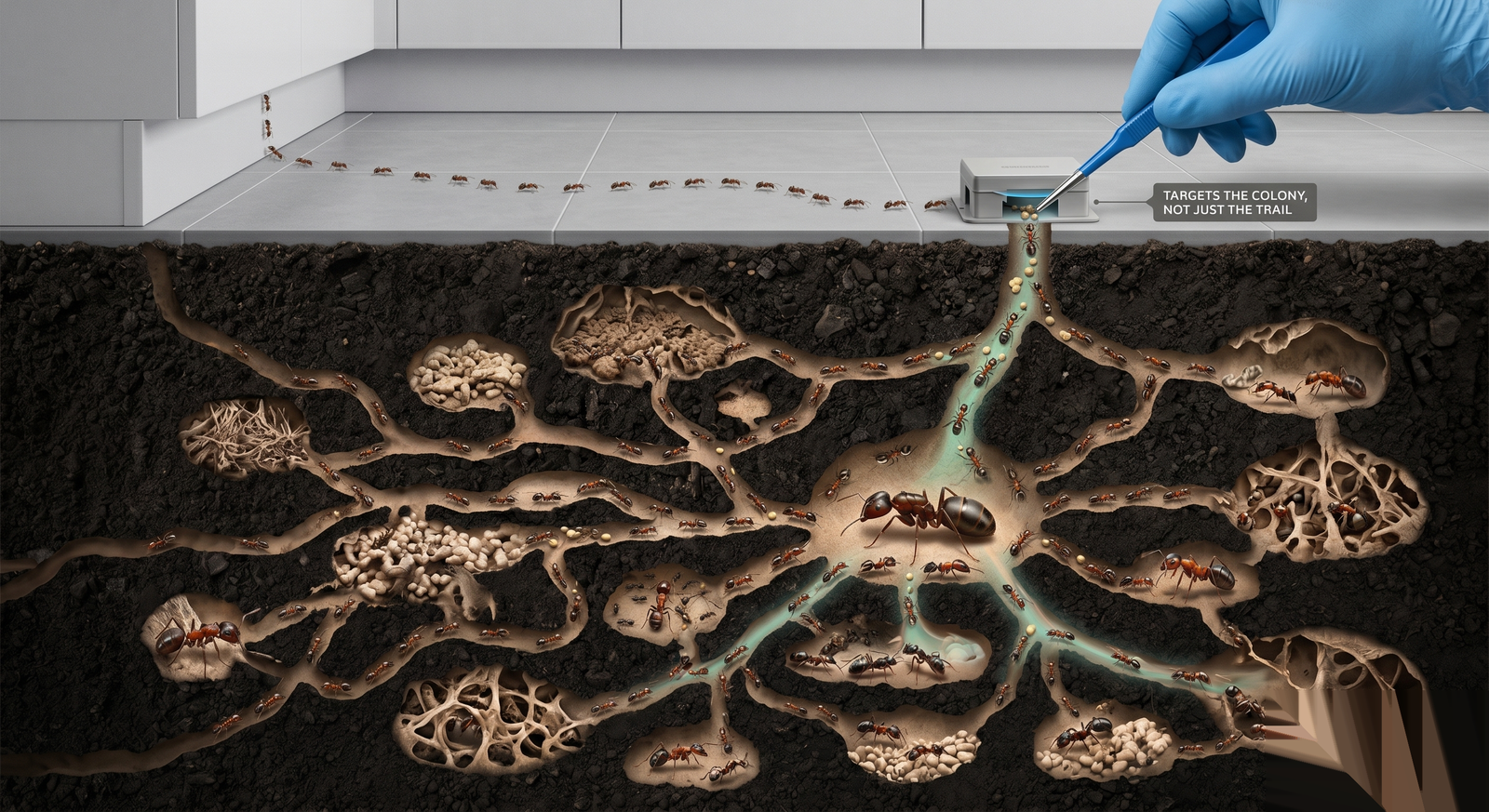
Contact sprays kill forager ants on contact — the workers you see on the trail. But a thriving Argentine ant colony in Northern California can contain millions of workers across dozens of connected nests. Killing the trail is like cutting one branch off a tree — the colony doesn't notice.
Forager workers represent only 10–15% of a colony. Queens — which can number in the hundreds in an Argentine ant supercolony — remain deep in protected nesting areas, completely unaffected by surface spray. The colony simply produces more foragers within days.
Many over-the-counter products are repellents — ants detect and avoid the chemical, splitting the colony into multiple satellite nests. A single infestation becomes three or four, each sending foragers from different directions. You end up with a bigger, more dispersed problem than you started with.
Ants, carpenter ants, and fire ants require completely different treatment approaches. Ants respond best to slow-acting gel baits. Carpenter ants need nest location and void treatment. Fire ants require mound injection. Using the wrong method for your species wastes time and money.
Correct identification is the foundation of effective ant control. Our technicians identify the species first — then choose the treatment approach designed specifically for that ant's biology and colony structure.
The dominant ant species across Sonoma and Mendocino Counties — and arguably the most difficult to control. Argentine ant supercolonies can span entire neighbourhoods, with hundreds of queens and millions of workers across dozens of interconnected nests. They thrive in the mild Northern California climate and actively displace native ant species.
Carpenter ants are the largest ant species in Northern California and one of the most damaging. They excavate wood to build their nests — not for food but for harborage — creating smooth-walled galleries inside structural timber. Common in older homes throughout Lake and Mendocino Counties, particularly near moisture-damaged wood.
Named for the distinctive coconut-like smell they produce when crushed, odorous house ants are relentless kitchen invaders across Ukiah, Windsor, and Lakeport. They nest in wall voids, under floors, and around water pipes — making them difficult to treat without understanding their nesting preferences and movement patterns.
Red imported fire ants are found in agricultural areas across the warmer parts of Lake and Mendocino Counties. Their sting is intensely painful and can cause serious allergic reactions. They build large mounds in open ground — lawns, pastures, and roadsides — and attack aggressively when disturbed. Particularly dangerous for children and animals.
Pavement ants build their nests under concrete slabs, driveways, sidewalks, and patios — pushing fine soil or sand to the surface as they excavate. Common across all of our service areas, they enter homes through cracks in foundations and expansion joints. While less destructive than carpenter ants, heavy infestations undermine pavement and enter kitchens reliably.
Velvety tree ants, harvester ants, thief ants, and other native species are also present across Lake, Mendocino, and Sonoma Counties. Our technicians identify every species we encounter and apply species-appropriate treatment — not a generic one-size-fits-all spray program that fails for any species it wasn't designed for.
We don't spray trails. We target colonies. Three methods — chosen based on the species, infestation severity, and property type — that eliminate the source and prevent return.
The most effective method for Argentine, odorous house, and pavement ants. Worker ants carry the bait back to the colony and share it with nestmates and queens through trophallaxis (food sharing). The slow-acting formula gives workers time to distribute it throughout the colony before it takes effect — eliminating queens and collapsing the entire network. Store-bought baits fail because they work too fast or use the wrong attractant for the local species.
Essential for carpenter ants, which nest inside wall voids, ceiling cavities, and structural timber. We inject dust or foam insecticide directly into nesting voids — reaching the colony where it lives, not just treating the surface. We also locate and address the moisture source attracting carpenter ants, which prevents re-infestation from adjacent satellite nests.
A non-repellent residual treatment applied to the full exterior perimeter — foundation, soffits, window frames, door frames, and entry points. Non-repellent products are undetectable to ants, so they walk through the treated zone and carry product back to the colony. The barrier remains effective for 30–90 days and prevents new foraging trails from establishing.
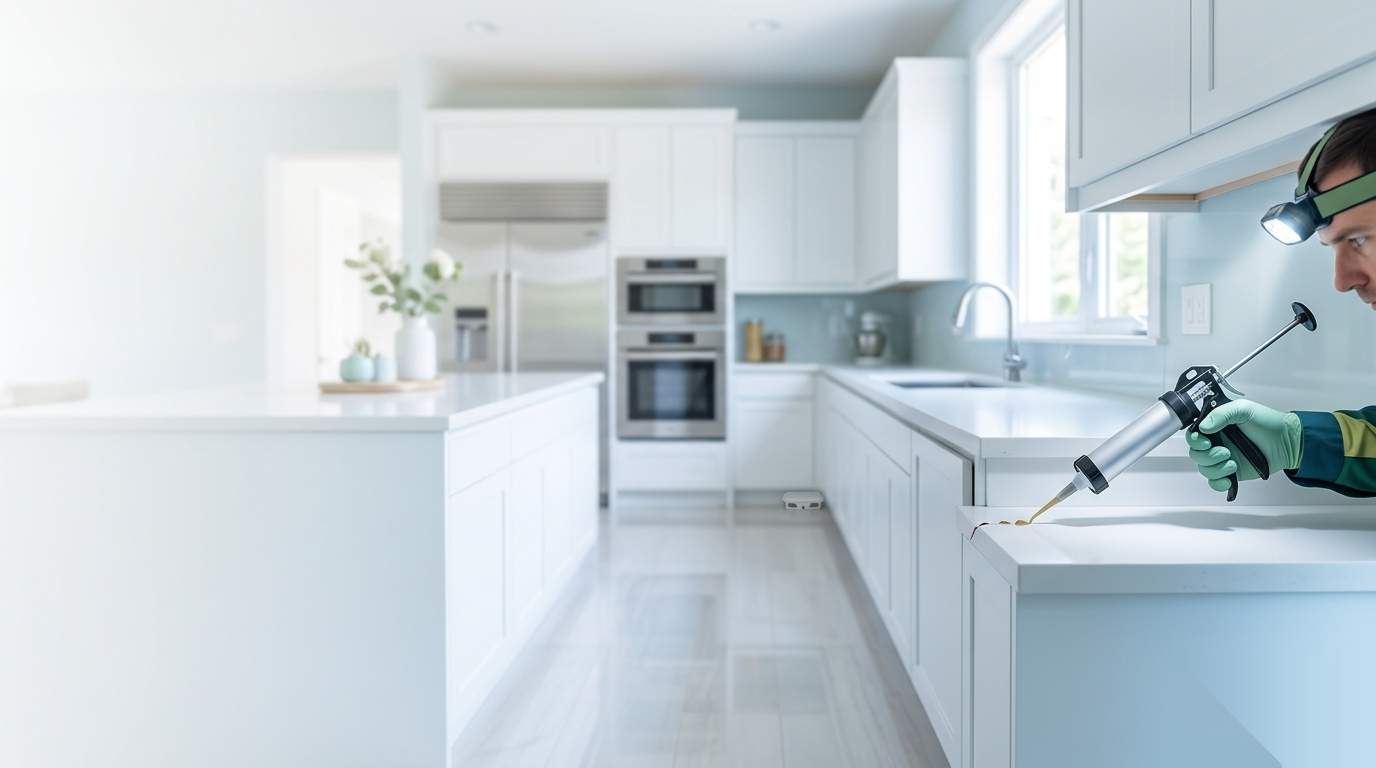
We begin by correctly identifying the ant species — Argentine, carpenter, odorous house, fire ant, or other. This is not optional. The wrong treatment for the wrong species wastes time, money, and can make the problem worse by scattering colonies.
We follow foraging trails to identify nest locations, satellite nests, and entry points into your home. For carpenter ants, we probe wall voids and look for frass (excavated sawdust) that indicates active nesting. Knowing where the colony is determines where we treat.
Gel bait placed precisely along ant trails and near nest entry points — not on the trail itself, which causes ants to avoid it. For carpenter ants, void injection to reach the nesting colony inside structural elements. Product selection matches the species' dietary preferences for maximum uptake.
Non-repellent residual treatment applied to the full exterior — foundation line, window sills, door frames, utility penetrations, and eaves. Ants cannot detect it, so they walk through it and transfer it colony-wide. Lasts 30–90 days, creating a persistent barrier against new foraging trails.
We advise on attractant reduction — sealing food, fixing moisture issues, trimming vegetation from the building — and schedule follow-up if needed. If ants return between visits, we come back at no charge. Full satisfaction guarantee on every service.
Understanding when and why ants are most active in Lake, Mendocino, and Sonoma Counties helps us time treatment for maximum impact — and helps you know when to call before the problem peaks.
Our ant control treatments use Integrated Pest Management (IPM) — low-toxicity, targeted products that eliminate the colony without harming Clear Lake, the Russian River, or your garden's pollinators. Safe for kids, pets, and the ecosystems of Lake, Mendocino, and Sonoma Counties.
We identify before we treat — every time. Applying the wrong product for the wrong species is how you end up with a bigger infestation than you started with. Our 23 years of local experience means we know exactly which species are active in your specific area of Northern California and what works against them.
We don't treat trails — we treat colonies. Our non-repellent baits and barrier products reach queens and workers deep inside the nest structure. This is the fundamental difference between a lasting solution and a temporary knockdown that has the ants back in a week.
Lakeport, Windsor, Ukiah, and Fort Bragg. Our locally-based technicians know the specific ant species and colony patterns in your neighbourhood — Argentine supercolonies in Windsor's new builds, carpenter ants in Lakeport's older lakeside homes, fire ants in agricultural Mendocino County. Local knowledge drives better results.
We use IPM-based, low-toxicity products on every ant control service — protecting Clear Lake, the Russian River, and the Mendocino coast's sensitive ecosystems. Our treatments are safe for children, pets, and pollinators. You should not have to choose between an effective treatment and a safe home.
If ants return between scheduled visits, we come back and re-treat at no additional charge. Our guarantee is backed by the quality of our treatment protocol — not just words on a page. Most of our ant control clients have no recurring problem after the first comprehensive service.
Ant invasions escalate fast — a trail in the kitchen becomes a full pantry infestation in days. Call us before noon and in most areas we have a licensed technician at your property the same afternoon. Four offices across three counties means we are genuinely fast, not just claiming to be.
Every community below has a locally-based Parker Pest Pro technician who knows the specific ant species and colony patterns in your neighbourhood. Colony-source treatment, wherever you are.
Contact sprays kill the forager ants you see — but they represent only 10–15% of the colony. Queens and the vast majority of workers remain deep inside the nest, completely unaffected. Within days the colony sends new foragers along the same trails. Professional treatment uses slow-acting bait workers carry back to the colony and share with queens, collapsing the entire population — not just the visible trail.
Our technician identifies the species during the Service Quote — this is the first and most important step of treatment. However, a rough guide: Ants are small, light brown, and travel in wide, well-defined trails. Carpenter ants are large (8–12mm), black or bicoloured, and often appear singly at night. Odorous house ants smell like coconut when crushed. Fire ants are reddish-brown and react aggressively when their mound is disturbed.
Yes — Ants are the most difficult common ant to control in Northern California for two reasons. First, their supercolonies can span hundreds of metres with multiple queens, meaning killing one nest has minimal impact. Second, repellent sprays cause colony fragmentation — splitting one colony into many. Effective Argentine ant control requires non-repellent slow-acting bait that workers share colony-wide, and a persistent exterior barrier to prevent re-entry.
Yes — significantly over time. Carpenter ants excavate wood to build smooth-walled galleries for nesting, weakening structural timbers, window frames, and door frames. Unlike termites, they do not eat wood — they remove it. In Lake and Mendocino County homes near moisture sources or with a history of water damage, carpenter ant damage can be extensive before it's noticed. Early treatment is far less expensive than structural remediation.
Gel bait treatments work over 5–14 days as workers distribute the product through the colony. You may see increased ant activity in the first few days as workers actively feed on bait — this is expected and means the treatment is working. Exterior barrier treatment provides immediate protection from new foraging trails. Full colony collapse typically occurs within 2–3 weeks for most species.
Yes. Our IPM-based treatments are selected specifically for low toxicity to mammals. Gel baits are placed in cracks and crevices inaccessible to pets and children. Exterior barrier treatments are safe once dry, typically within 30–60 minutes. We provide specific safety guidance during each visit and will always discuss your household situation before applying any product.
For a one-time infestation in a sealed home, a single comprehensive treatment is often sufficient. However, Argentine ant supercolonies in Northern California are persistent — exterior pressure from neighbouring properties and gardens continues year-round. Our Recurring Service Plan Cost maintains the exterior barrier and bait stations seasonally, preventing re-establishment. Most clients with recurring ant problems find the plan eliminates the cycle entirely.
The three primary attractants are food, moisture, and shelter. Ants follow food trails to kitchens, pantries, and pet food. Carpenter ants are drawn to moisture-damaged wood — leaking pipes, roof damage, and poor drainage around the foundation. All species seek the stable temperature and humidity inside structures. Our inspection identifies and advises on reducing these attractants as part of every service.
Prompt scheduling and fast service available across all four offices. A locally-based technician will identify your ant species, locate the colony, and present a clear treatment plan before treating anything.
We treat colonies, not trails. Our non-repellent, slow-acting bait reaches queens and workers throughout the nest — creating a lasting solution, not a temporary knockdown that has them back in a week.