Black widows are endemic to Lake and Mendocino Counties — not a rare encounter. Parker Pest Pro removes webs, eliminates egg sacs, treats harborage areas, and applies a residual exterior barrier that keeps spiders out. Safe. Thorough. Guaranteed.
Lake County and rural Mendocino County have some of the highest black widow densities in California. Warm summers, abundant prey insects, and the prevalence of wood structures, stone walls, and undisturbed outdoor storage create ideal habitat. Most homeowners in our service area encounter them regularly — in garages, under decking, and around wood piles.
The black widow's venom is neurotoxic — approximately 15 times more potent than rattlesnake venom by weight. While fatalities are rare in healthy adults due to the small amount injected, bites cause severe systemic symptoms and require immediate medical attention. Children, elderly individuals, and those with heart conditions face significantly higher risk.
Black widows prefer dark, sheltered, undisturbed areas with access to insects. The typical garage — cluttered corners, behind storage, around door frames and window ledges — is ideal habitat. Reaching into a dark area without checking is how most bites occur. Our treatment specifically targets these areas.
Children playing near wood piles, in garages, or in garden areas face particular exposure risk — both because they are physically closer to ground-level harborage areas and because their smaller body mass means venom effects are more severe. For households with young children, active spider control is a safety priority, not an optional comfort measure.
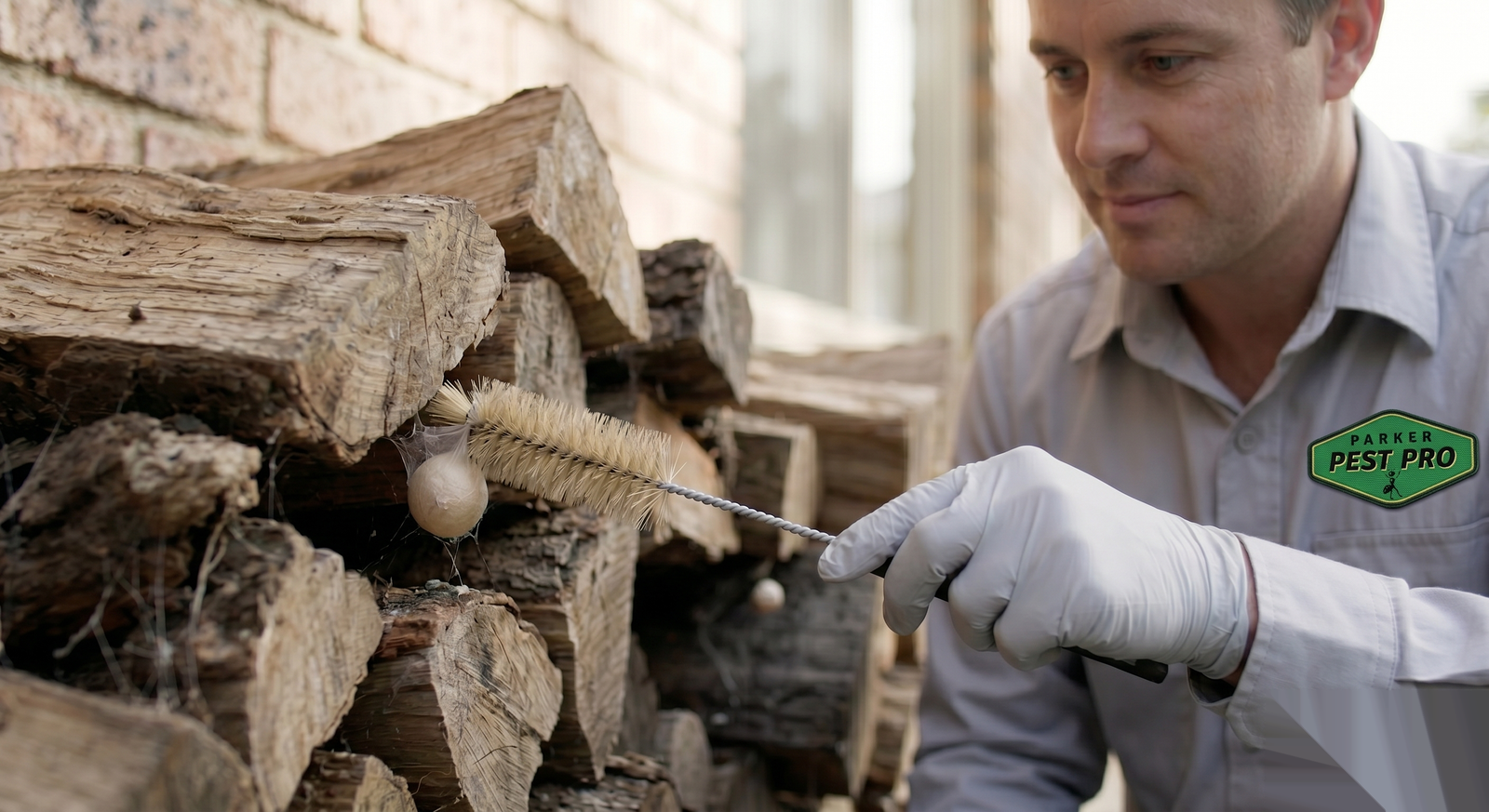
A single black widow egg sac contains 200–300 eggs — all of which hatch within weeks. Killing visible adult spiders without removing egg sacs leaves the next generation in place. Our treatment includes complete egg sac removal from all identified harborage areas — the step that prevents reinfestation within the same season.
Different spider species require different treatment approaches and have vastly different risk profiles. Our technicians identify correctly before treating — and target each species with the most effective method for its specific biology and behaviour.
The Western black widow (Latrodectus hesperus) is the most medically significant spider in Northern California — and genuinely common throughout Lake and Mendocino Counties. Females are shiny black with the iconic red hourglass marking on the underside of the abdomen. They build irregular, tangled webs in sheltered low-to-ground locations and are aggressive about defending eggs.
The brown recluse (Loxosceles reclusa) is less commonly encountered in Northern California than in the southern and central states, but confirmed populations exist and misidentification of look-alike species is common. Its bite causes necrotic skin lesions in a minority of cases — potentially serious. They inhabit undisturbed, cluttered areas: cardboard boxes, stored clothing, and seldom-moved furniture.
Wolf spiders are large (up to 35mm), fast-moving, ground-hunting spiders that do not build webs — they actively chase prey. Their size and speed make them alarming when found indoors, though their venom is not medically significant. They enter homes through gaps at ground level and are particularly common in the fall across all of our service areas as temperatures drop.
Cellar spiders (Pholcus phalangioides) — sometimes called "daddy long-legs" spiders — build messy, persistent webs in basements, sub-floor areas, ceiling corners, and undisturbed areas. They multiply rapidly and their accumulated webbing becomes a significant aesthetic problem over time. While harmless, a heavy infestation indicates conditions (moisture, insect prey) that attract other more dangerous species.
The common house spider (Parasteatoda tepidariorum) is responsible for most of the cobwebs found in corners, window frames, and ceiling junctions in homes throughout Northern California. They are harmless, but active populations produce persistent, unsightly webbing throughout the home and indicate that insect prey is available indoors. Our barrier treatment significantly reduces house spider activity.
Several large orb weaver and garden spider species build spectacular, circular webs in gardens, eaves, and outdoor areas throughout Northern California. While completely harmless and ecologically beneficial, large populations near entry points, play areas, and high-traffic outdoor spaces can be a nuisance. We treat exterior harborage areas and provide prevention advice on habitat reduction.
Black widows are deliberate about where they build — they seek specific conditions that most homes provide in abundance. Our inspection covers every one of these areas systematically.
Most companies spray and leave. We remove, treat, and seal — addressing the existing population, eliminating the next generation via egg sac removal, and creating a barrier that prevents re-establishment.
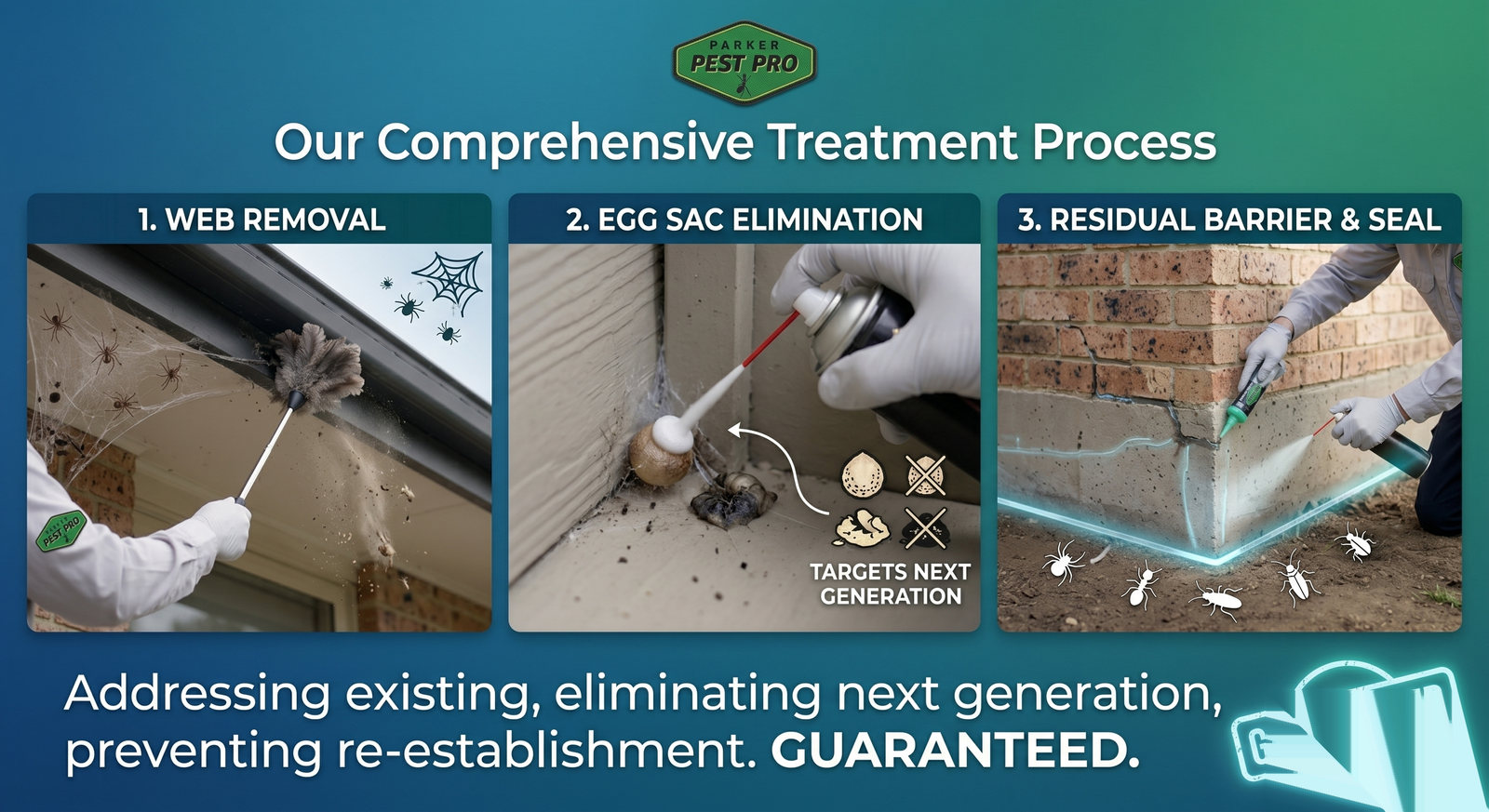
We systematically inspect every harborage area — garage, shed, sub-floor area, under deck, wood storage, garden borders, and exterior perimeter. We identify species present, severity, and all active web and egg sac locations before treating anything.
Every web and egg sac in the identified harborage areas is physically removed — this is the most important step that most companies skip. Removing webs removes egg sacs (each containing 200–300 eggs) and forces spiders to abandon the area. Without this step, a chemical treatment alone is a temporary fix.
Residual insecticide applied directly to identified harborage areas — garage corners, under shelving, sub-floor area perimeter, under deck joists, and around wood storage. This reaches spiders in their resting locations rather than treating open surfaces they rarely contact.
A residual barrier treatment applied to the full exterior perimeter — foundation, soffits, window and door frames, utility penetrations, and eaves. This intercepts spiders moving toward the structure from adjacent garden and landscape areas, preventing re-establishment in treated zones.
We advise on habitat reduction — relocating wood storage, reducing exterior lighting that attracts prey insects, sealing gaps, and decluttering high-risk areas. If spiders return between visits, we come back at no charge. Full satisfaction guarantee on every service.
Physical removal of all webs and egg sacs is the most impactful single step in spider control — more important than any chemical treatment. Removing webs eliminates hundreds of unhatched spiders per sac, forces remaining spiders to abandon the area, and removes the visual and structural harbourage framework that supports re-establishment. We use professional extension tools to reach eaves, garage ceilings, and underdeck areas.
Professional-grade residual insecticide applied directly into harborage areas — not broadcast-sprayed on open surfaces. Spiders contact treated surfaces when moving through their established territory: at the back of corners, along harborage perimeters, and at entry points into wall voids. This targeted application is far more effective than surface spraying and uses significantly less product overall.
A residual exterior barrier applied around the full foundation perimeter, window and door frames, utility penetrations, and eaves intercepts spiders moving toward the structure. This barrier typically provides 60–90 days of protection per application. For properties with persistent pressure — particularly lakeside and rural Mendocino County homes with high insect activity — seasonal re-application is recommended.
Spider activity follows seasonal patterns across Lake, Mendocino, and Sonoma Counties — knowing when populations peak helps you time treatment for maximum impact.
Physical web and egg sac removal is the most impactful step and requires zero chemicals. Our IPM approach prioritises mechanical removal first, then applies targeted residual treatment only where needed — using the minimum effective amount in the minimum number of locations. Safe for families, pets, and Northern California's waterways and wildlife.
Most companies treat visible spiders and leave. We physically remove every web and egg sac in identified harborage areas. A single black widow egg sac contains 200–300 eggs. Leaving egg sacs in place after treatment guarantees reinfestation within weeks. Egg sac removal is included in every spider control service we perform.
We inspect the garage, shed, sub-floor area, under deck, wood storage areas, garden borders, and exterior perimeter systematically. Black widows in particular establish in areas that are easy to overlook during a cursory inspection. Our thorough approach finds populations that have been missed for years — and eliminates them completely.
We've treated black widow infestations across Lake County, Mendocino County, and Sonoma County for over 23 years. We know the specific harborage preferences, seasonal patterns, and property types where black widows concentrate most densely in our region. That local knowledge means we find populations that a general pest control company would miss.
A black widow infestation in a garage or play area is a safety priority, not a routine service call. With four offices in Lakeport, Windsor, Ukiah, and Fort Bragg, we can have a licensed technician at your property the Fast response in most areas. Call us before noon and we respond that afternoon.
If spiders return between scheduled visits, we come back and re-treat at no additional charge. Our guarantee covers every spider species, every location, and every property type across all 18 communities we serve. Complete satisfaction on every service — no exceptions.
Physical removal first, targeted treatment second. We use IPM principles on every spider control service — choosing low-toxicity residual products and applying them precisely in harborage areas. Safe for children, pets, and the ecological sensitivity of Clear Lake, the Russian River, and the Mendocino coast.
Black widow specialists with 4 local offices across Lake, Mendocino, and Sonoma Counties. Your technician lives in your community and knows the specific spider pressures in your neighbourhood.
Black widow venom is neurotoxic — affecting the nervous system and causing severe muscle pain, cramping, nausea, sweating, and in serious cases, difficulty breathing. While fatalities are rare in healthy adults, bites require immediate medical attention. Children, elderly individuals, and those with cardiovascular conditions face significantly higher risk. Any suspected black widow bite should be treated as a medical emergency.
Because the conditions that attract black widows — shelter, darkness, prey access, and undisturbed space — haven't changed. Killing individual spiders without removing egg sacs and treating harborage zones leaves the next generation in place. Our treatment addresses the conditions, removes the existing population and its eggs, and creates a barrier that prevents new spiders from re-establishing in the same locations.
Yes — Lake County has notably high black widow densities relative to most of California. The combination of warm summers, abundant prey insects around Clear Lake, rocky terrain, and the prevalence of garages, outbuildings, and wood storage structures creates optimal black widow habitat throughout the county. Our Lakeport-based technicians treat black widow infestations routinely throughout the year — it is one of our most frequent service calls in this area.
For exterior-only treatment — web removal, barrier spray, and harborage treatment outside — you do not need to be present. For interior areas such as garages, sub-floor areas, and basements, we prefer you or a responsible adult to be available. Pets and children should avoid treated areas until dry, typically 1–2 hours. Your technician will advise specifically based on the scope of your treatment.
Several habitat modifications significantly reduce black widow pressure: store firewood at least 5 metres from the house on a raised rack; declutter garage corners and under-shelf areas; seal gaps around garage doors, windows, and utility penetrations; reduce exterior lighting that attracts the insects black widows prey on; and clear landscape debris from the foundation perimeter. We advise on all of these during every inspection.
For properties with persistent black widow pressure — especially in Lake County and rural Mendocino County — we recommend a semi-annual treatment: once in early spring before the season begins, and once in early fall before spiders move indoors. Properties with moderate pressure typically benefit from annual treatment. Our technician will recommend a frequency based on your specific property assessment.
Yes. We use low-toxicity residual products applied in targeted harborage areas — not broadcast-sprayed on surfaces your family contacts. Products are safe once dry, which typically takes 1–2 hours. We use IPM principles to minimise chemical use overall, with physical web and egg sac removal as the primary treatment step. We provide specific guidance for households with young children, infants, or pets with sensitivities.
Yes — sub-floor area treatment is included in our comprehensive spider control programs. Crawl spaces are common black widow and cellar spider habitats that are frequently overlooked. Our technicians access sub-floor areas, remove webbing, and apply targeted treatment to the perimeter and harborage areas. can be combined with our general pest control and rodent entry-point sealing services for complete protection.
Prompt scheduling and fast service available across all four offices. A locally-based technician will inspect every harborage area on your property, remove webs and egg sacs, and present a complete treatment plan.
Every service includes complete web and egg sac removal — the step that prevents the next generation from establishing. This is what separates lasting spider control from a temporary fix.